
Air Leak Testing Process
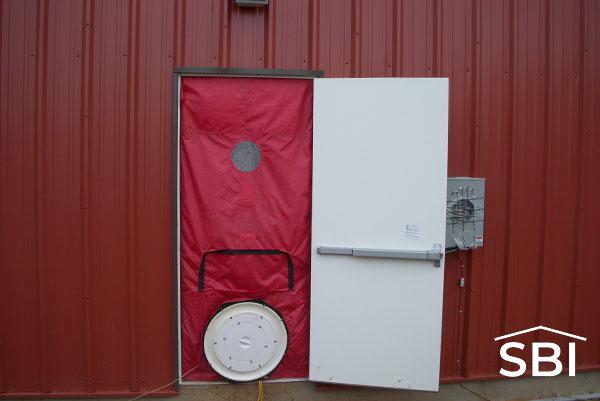
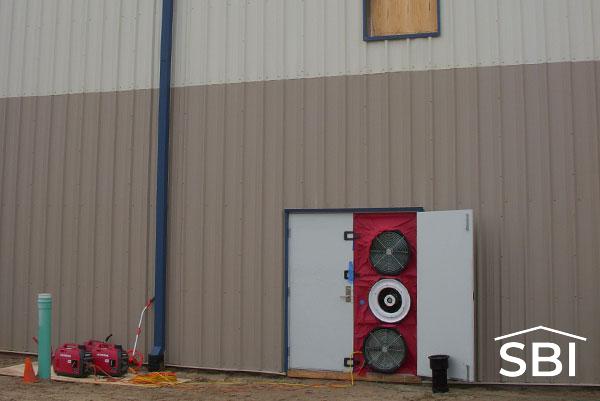
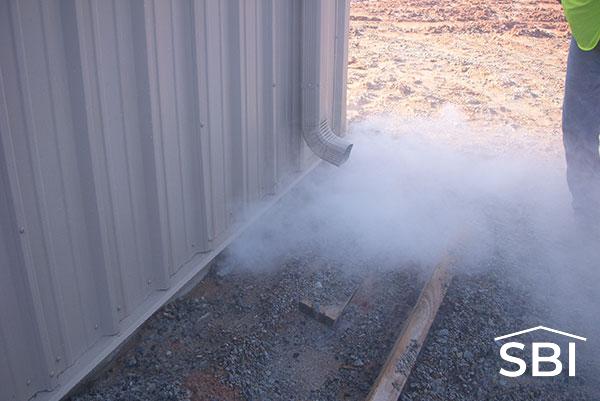
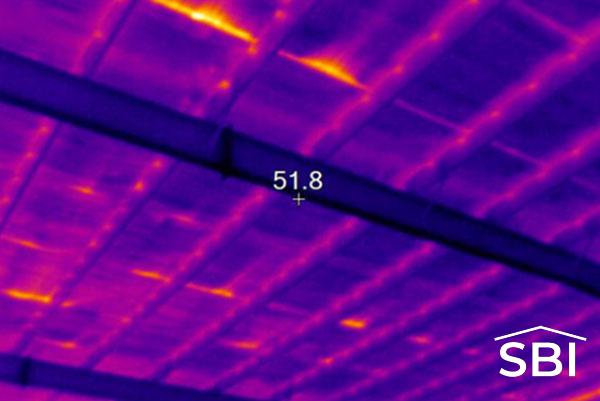
*Photos Provided by Courtesy of MBMA
ASHRAE 90.1-2019 Exceptions
ASHRAE 90.1-2019 requires most buildings to undergo whole building air leakage tests with just a handful of exceptions. The only buildings exempt from air leakage testing under ASHRAE 90.1-2019 include semi-heated buildings in Climate Zones 1 – 6. However, buildings may be able to comply with the terms of ASHRAE 90.1-2019 by going through an installation verification program instead of undergoing whole building air leakage testing.
IECC 2021 Exceptions
IECC 2021 also requires most buildings to undergo whole building air leakage tests, but again, there are a few exceptions. Buildings constructed within Climate Zones 2B, 3B, 3C and 5C are exempt. So, too, are buildings in Climate Zones 1, 2A, 4B and 4C that span more than 5,000 square feet, and buildings in Climate Zones 3A and 5B that fall between 5,000 and 50,000 square feet. Unlike with ASHRAE 90.1-2019, there is no way other than air leakage testing for buildings that are not exempt to meet the terms of IECC 2021.
If you are interested in learning more about Metal Building Energy Codes and Construction, the Metal Building Contractors & Erectors Association (MBCEA) provides training courses and information on the most current construction techniques and requirements.